Customer experience & the case for AI-powered fraud detection

Mary Ellen Biery
August 6, 2026
0 min read

How a financial institution responds to fraud makes a difference

Consumers are decidedly receptive to the concrete results that AI-powered fraud detection enables, according to Abrigo's 2026 State of Fraud Survey.

Key topics covered in this post: 
AI-based fraud: A widespread consumer concern

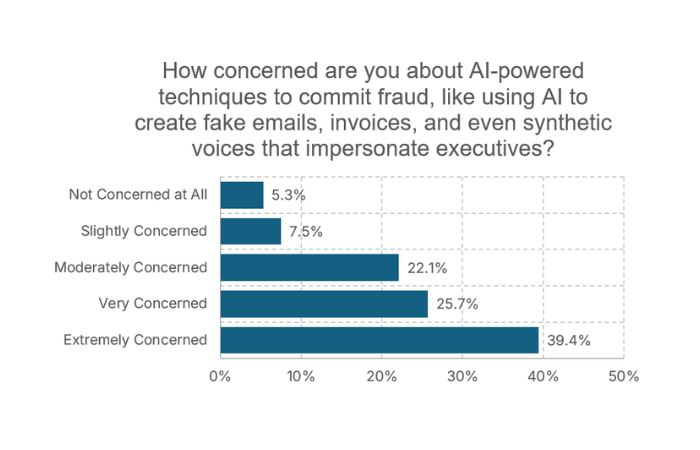
One of the clearest takeaways from Abrigo’s 2026 State of Fraud Survey is that consumers are deeply concerned about AI-powered fraud techniques, including fake emails and invoices and synthetic voices used to impersonate executives. In the survey, 65.1% of respondents said they were extremely or very concerned about those techniques, and another 22.1% were moderately concerned.  

Among all age groups, older consumers had the highest level of extreme concern about AI-powered fraud (51.1%), which is understandable, given the magnitude of financial fraud targeting older adults. In contrast, only 21.8% of consumers ages 18 to 24 had extreme concern.

Fraud changes constantly. Stay on top of the latest trends and practices with complimentary webinars.

See upcoming fraud webinars

Firsthand experience with AI fraud

Fortunately, concern does not necessarily reflect widespread firsthand experience with AI-assisted fraud.
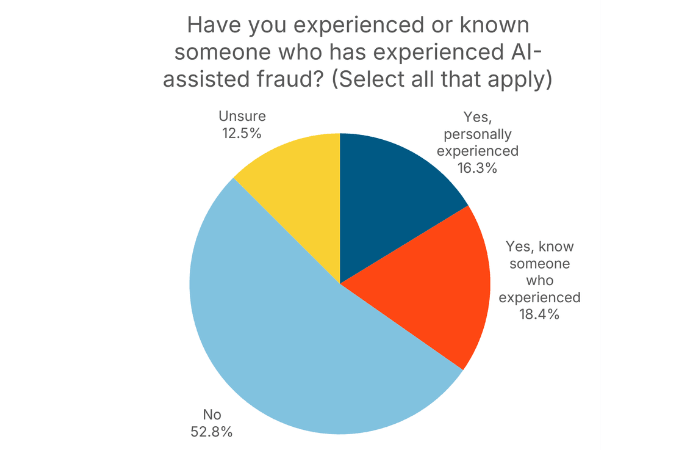
About 1 in 6 consumers have personally experienced it, while nearly 1 in 5 know someone who has. Consumers ages 25 to 44 were the most likely to have either experienced AI-assisted fraud themselves or know someone who has.

Consumers want confidence in concrete protections

Given their experience and concern, customers want and need confidence that their financial institution can:

  • detect fraud danger quickly
  • understand a transaction alert
  • communicate when needed
  • respond quickly to prevent or limit damage.

In fact, 3 out of 5 consumers said being a victim of fraud would make them more likely to minimize their banking relationship with a financial institution.

The good news for financial institutions is that clients do not need to know about every tool in the fraud stack for effective tools to create value. Many consumers do not know whether AI is already part of their institution’s fraud defenses. In Abrigo’s survey, 55.7% of consumers (and 84.4% of consumers 65 and older) do not know whether their current bank or credit union uses AI-enabled fraud-detection tools. Only 18.9% said they do know. 

That uncertainty may be tempering enthusiasm for AI tools and may reflect an opportunity for customer or member education. Nearly half of consumers, 45.6%, said they need more information to say whether AI is effective at fraud detection. And when asked if they’d feel more confident in their institution’s ability to detect fraud if it used AI tools, respondents were roughly split among yes, no, and “I don’t know.”

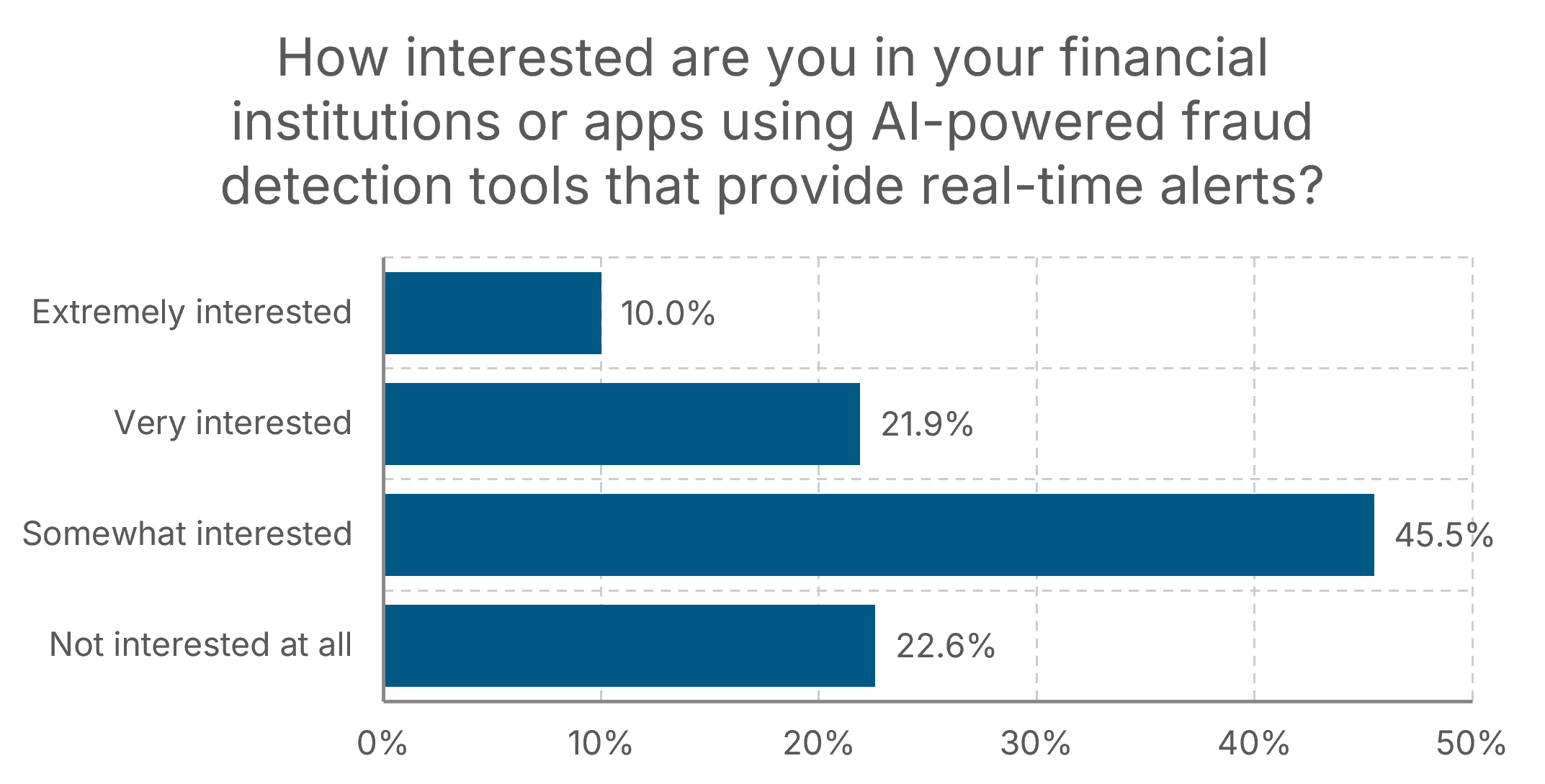
But consumers are decidedly receptive to the concrete results that AI fraud detection can enable. More than three-quarters of respondents, 77.4%, said they were at least somewhat interested in financial institutions or apps using AI detection tools that provide real-time alerts.
When asked what would make them more secure in their banking experience:

  • 1% selected faster alerts and automatic transaction blocking.
  • 7% selected stronger authentication methods.
  • 9% selected AI-driven fraud detection that learns from spending habits.

Types of protection they can see or feel

The value of AI-enabled fraud detection lies in helping fraud teams spot risk sooner, sort alerts more intelligently, and respond with better information so that fraud losses are fewer, not in whether customers recognize the technology. A consumer may not know whether AI helped identify a suspicious check, prioritize a wire alert, or flag unusual ACH activity. But they are likely to be affected by a faster alert, a blocked transaction, or a timely request to verify activity. They will also notice if the financial institution’s response is slow and confusing. Financial institutions carry the operational burden behind customer expectations. Fraud teams need to evaluate activity across channels, payment types, customer behavior, and known fraud patterns. They also need enough transparency to understand why an alert surfaced and what action makes sense. Consider check fraud. A traditional review process may rely heavily on manual inspection, static thresholds, and staff experience. An AI-enabled check fraud system can review more signals at greater speed. Abrigo’s check fraud detection solution uses AI and machine learning for check image analysis, examining 24 check attributes, applying consortium data from confirmed fraudulent check activity, and assigning a transaction risk score with explanations behind the score. For the analyst, a suspicious item can come with more context: image concerns, pattern matches, a risk score, and reasons for review. For the institution, the additional context can support faster and more consistent decisions and fewer losses. Abrigo Fraud Detection customers are recovering their investment in six months or less, based on their average monthly reduction in fraud losses. For the customer or member, the visible result may be a held item, an alert, or a verification step before a loss occurs. Across fraud types, these tools help teams spot patterns, prioritize alerts, and investigate suspicious activity more efficiently. AI works best when it strengthens human judgment. A model can help identify patterns that staff may miss. A risk score can help prioritize what needs immediate review. Configurable rules can help align decisions with the institution’s risk profile. AML/fraud case management can help teams document actions and move investigations forward. Consumers are clear about what they value: early warning, stronger protection, and decisive action when something looks wrong. AI does not need to be the headline to matter. Its value is in helping financial institutions detect, prioritize, explain, and respond to fraud risk before customers experience the loss. Abrigo supports that work with AI-enabled fraud detection, transparent risk scoring, configurable rules, check image analysis, behavioral analytics, and workflows that help teams review alerts and act faster.
This blog was written with the assistance of ChatGPT, a large language model. It was reviewed by Abrigo subject matter experts.
 

Abrigo Fraud Detection helped this $580 million bank cut fraud review time by 75%. Learn how.

Read the story

The information, content and materials provided through this website are for informational purposes only and are not intended to constitute legal advice. Customers should consult with their legal counsel regarding the application of laws and regulations to their specific circumstances.

About the Author

Mary Ellen Biery

Senior Strategist & Content Manager
Mary Ellen Biery is Senior Strategist & Content Manager at Abrigo, where she combines financial journalism, original research, and SEO/AEO strategy to create authoritative content that helps financial institutions manage risk and pursue growth. A former Dow Jones Newswires equities reporter, her work has appeared in The Wall Street Journal,

Full Bio

About Abrigo

Abrigo enables U.S. financial institutions to support their communities through technology that fights financial crime, grows loans and deposits, and optimizes risk. Abrigo's platform centralizes the institution's data, creates a digital user experience, ensures compliance, and delivers efficiency for scale and profitable growth.

Make Big Things Happen.