
Looking for Valuant? You are in the right place!

Valuant is now Abrigo, giving you a single source to Manage Risk and Drive Growth

Make yourself at home – we hope you enjoy your new web experience.

Looking for DiCOM? You are in the right place!

DiCOM Software is now part of Abrigo, giving you a single source to Manage Risk and Drive Growth. Make yourself at home – we hope you enjoy your new web experience.

Looking for TPG Software? You are in the right place!

TPG Software is now part of Abrigo. You can continue to count on the world-class Investment Accounting software and services you’ve come to expect, plus all that Abrigo has to offer.

Make yourself at home – we hope you enjoy being part of our community.

Managing construction lending risks: Less volatility and improved project performance

Mary Ellen Biery
November 21, 2025
0 min read

Recognize risks & opportunities  

Banks and credit unions can manage construction lending risks by understanding where today’s risks originate and how to mitigate their impact.

Key topics covered in this post: 

Changing construction lending conditions

In today’s construction market, it can feel like everyone is building on shifting sands.

Rising costs, labor challenges, and economic crosswinds continue to test even well-planned projects. For financial institutions, lending opportunities are growing, but managing construction lending risks requires a firmer footing and sharper tools to adapt before cracks appear.

By understanding where today’s construction lending risks originate and how to mitigate their impact, banks and credit unions can grow safely while strengthening borrower relationships along the way.

Watch the full webinar, "Construction industry trends for lenders."

Watch now

What are the current risks to construction lenders?

The construction industry continues to show cautious optimism, but sentiment surveys and lender experiences reveal headwinds that should be on every lender’s radar.

“The beauty of the construction industry is there are always going to be opportunities; there are always going to be projects,” said Brian Kassalen, CPA, CFF, CCIFP, and Construction Industry Practice Leader at Baker Tilly, during a recent webinar hosted by Abrigo. Specifically, Baker Tilly is seeing new projects in civil infrastructure, power generation, data centers, educational and institutional health care facilities.

At the same time, he said, many of the thousands of contractors nationwide are dealing with persistent labor shortages and pressures in material costs.

Industry indexes, such as the CFMA Confindex and the FMI Nonresidential Construction Index, both reflect this cautious optimism, showing improvement in current backlogs but concern about the future pipeline, profit margins, and financing conditions. A poll of lenders attending  Abrigo's webinar found most are cautiously  optimistic about the construction industry outlook.Poll results from construction lenders on their outlook for the construction industry
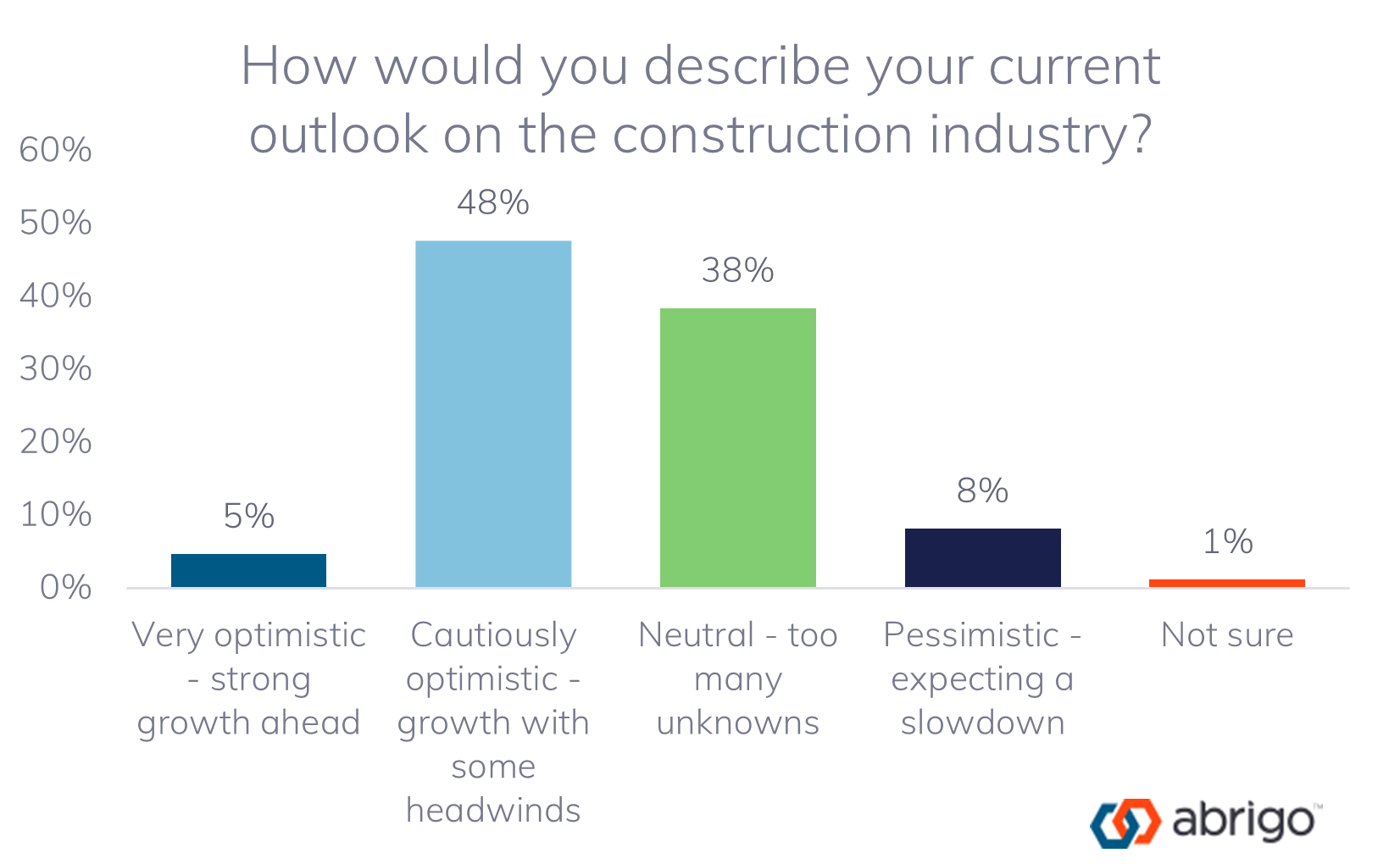
Among the most pressing risks for lenders, according to Kassalen:

  • Tariff and material price volatility: Shifts in input costs affect contractors’ ability to bid accurately and complete jobs profitably.
  • Cash flow timing: Contractors often pay vendors and crews faster than they receive payment, increasing the likelihood of liquidity challenges.
  • Project cost overruns: Whether due to under-scoped budgets or rising labor costs, these overruns can reduce or eliminate a borrower’s profit margin.
  • Uncertain economic indicators: Although some backlogs are growing, indexes show that confidence in both the U.S. and local economies is mixed, and signs of a slowdown are surfacing.

Abrigo's poll identified concerns related to pricing and project overruns.
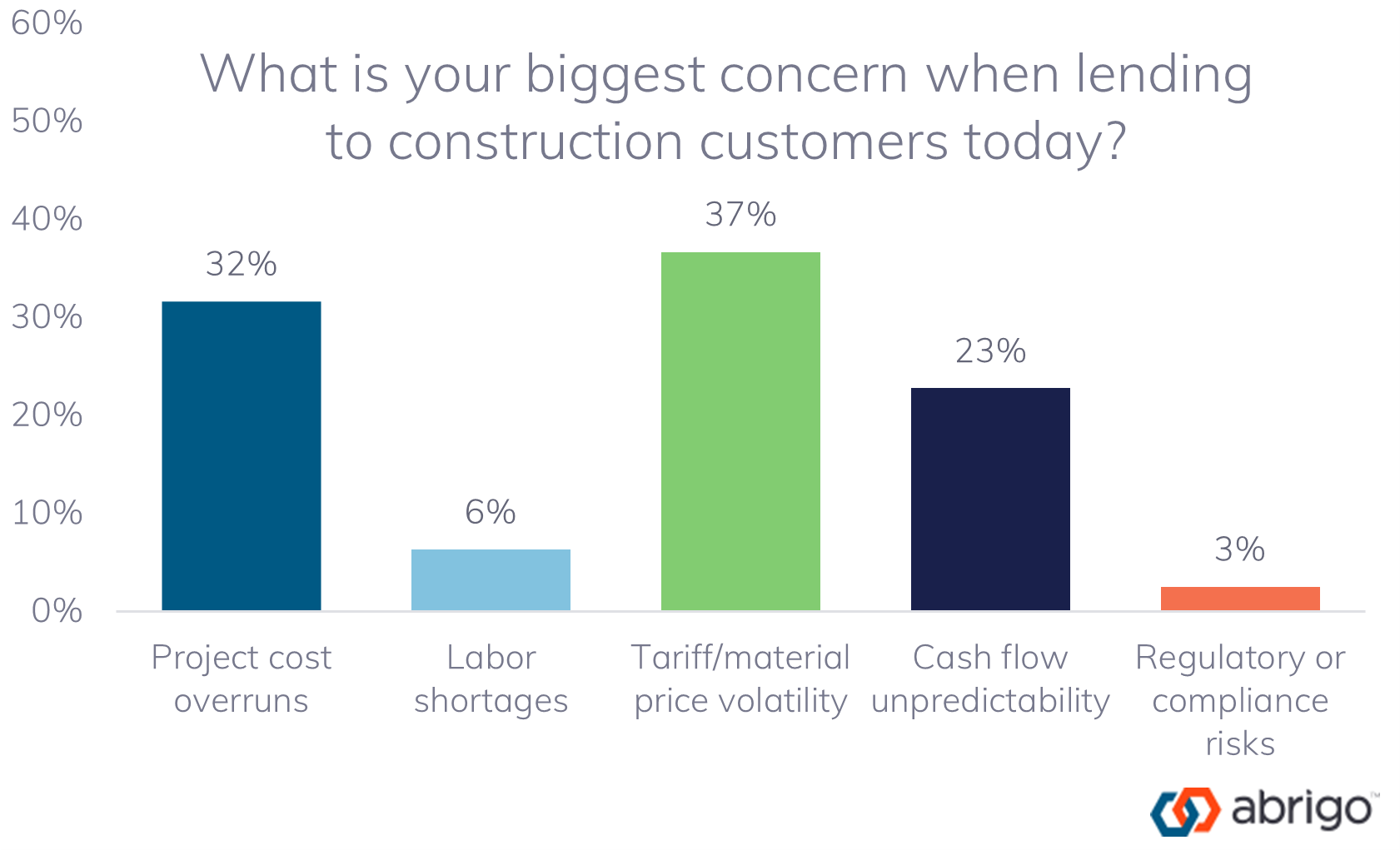
Abrigo poll of lenders regarding concerns with construction lending

How can lenders guard against surprises?

Construction loan performance depends on numerous variables that can fluctuate during the course of a project. Lenders can’t control market conditions, but they can put strategies in place to anticipate changes and respond quickly. These steps don’t just manage risk—they demonstrate value to the borrower and build long-term trust.

Here are four ways lenders can proactively manage construction lending risks:

  1. Maintain regular borrower check-ins

When the lending relationship goes quiet between draws, lenders lose visibility into what’s really happening on the project. Frequent touchpoints, such as those tied to inspection or budget review milestones, can reveal concerns early, including subcontractor delays or cost overruns. In addition, Kassalen noted that a lot of construction contractors still appreciate in-person interactions and connections, so leaning into personal contact can solidify the relationship.

  1. Support borrower cash flow visibility

One of the key pain points for contractors is balancing their payables with receivables. Sharing treasury management tools or connecting them with financial advisors who can help them model cash flow projections is a practical way to strengthen the relationship and improve project stability. “What I think is most important is really just bringing solutions to your construction clients,” Kassalen said.

  1. Review contractor experience and project history

While lenders typically vet borrowers during underwriting, it’s worth refreshing that knowledge as new projects are proposed. Contractors operating in unfamiliar markets or taking on unusually complex jobs may face steeper learning curves and hidden risks.

  1. Scrutinize the draw schedule and budget alignment

An imbalanced draw schedule can create financial pressure at the wrong stages of a project. Lenders should ensure that the disbursement timeline aligns with actual construction milestones and that retainage or contingency funds are appropriately accounted for.

These steps can help institutions shift from a reactive to a proactive stance on construction lending. But as portfolios grow, managing this level of oversight manually becomes increasingly tricky.

The hidden cost of manual processes

Many institutions still manage their construction loans with spreadsheets, shared drives, or paper-based checklists. While familiar, these manual systems introduce risk, especially when construction loan volume increases or staff turnover occurs.

Manual construction lending processes can:

  • Delay draw approvals, frustrating borrowers and increasing project risk
  • Introduce errors in budget tracking or inspection documentation
  • Make it difficult to monitor portfolio performance at scale
  • Limit the institution’s ability to spot early warning signs

Even the best lending teams can’t maintain full visibility without tools that surface real-time project data and streamline collaboration.

How construction loan management software reduces risk

Construction loan management software can help manage construction lending safely and efficiently. These platforms replace manual workflows with centralized systems that automate project tracking, draw management, and communication among stakeholders.

Abrigo’s construction loan management software provides:

  • A personalized dashboard that provides a real-time view of each project, including action items, inspection status, draw progress, and budget tracking.
  • Automated workflows that accelerate inspections and draw approvals while maintaining controls, enabling 8% to 12% higher draw income.
  • Mobile access for inspectors, who can submit photos and notes directly from the field
  • Templates for budgets that save time and ensure consistency as the construction portfolio grows.
  • Real-time portfolio reporting and a comparative report showing balances from the core system and Construct, allowing risk managers to identify and fix discrepancies.
  • Audit trails and documentation, ensuring the institution is exam-ready and maintaining transparency

Software designed specifically for construction loan oversight provides financial institutions with the tools they need to manage project overruns and navigate the uncertainties of cash flow timing. Just as importantly, the automation frees up lending teams to focus on building relationships rather than reviewing spreadsheets.


Building strength through smarter construction lending

Financial institutions can’t eliminate construction lending risk, but they can and should manage it, especially in an uncertain environment.

With the right strategies in place and the right tools supporting them, financial institutions can continue to grow their construction portfolios while reducing surprises along the way. Lenders who understand the risks in construction, understand the story a contractor’s financial statements tell, and provide contractors with cash management resources and regular check-ins can help contractors better manage their businesses. That’s how lenders set themselves apart and help build businesses in their community that thrive.

Boost efficiency and draw income for construction loans.

Get a demo
About the Author

Mary Ellen Biery

Senior Strategist & Content Manager
Mary Ellen Biery is Senior Strategist & Content Manager at Abrigo, where she works with advisors and other experts to develop whitepapers, original research, and other resources that help financial institutions drive growth and manage risk. A former equities reporter for Dow Jones Newswires whose work has been published in

Full Bio

About Abrigo

Abrigo enables U.S. financial institutions to support their communities through technology that fights financial crime, grows loans and deposits, and optimizes risk. Abrigo's platform centralizes the institution's data, creates a digital user experience, ensures compliance, and delivers efficiency for scale and profitable growth.

Make Big Things Happen.