Looking for Valuant? You are in the right place!

Valuant is now Abrigo, giving you a single source to Manage Risk and Drive Growth

Make yourself at home – we hope you enjoy your new web experience.

Looking for DiCOM? You are in the right place!

DiCOM Software is now part of Abrigo, giving you a single source to Manage Risk and Drive Growth. Make yourself at home – we hope you enjoy your new web experience.

IFSLeaseWorks is now part of Abrigo.

Diversify your portfolio and earn additional interest income. End-to-end lease origination and administration automation make it possible.

Read the press announcement

Looking for TPG Software? You are in the right place!

TPG Software is now part of Abrigo. You can continue to count on the world-class Investment Accounting software and services you’ve come to expect, plus all that Abrigo has to offer.

Make yourself at home – we hope you enjoy being part of our community.

Journey Technology Solutions is now part of the Abrigo family.

Turn complex data into actionable insights for faster, more informed decision-making.

Read the press release

360 View is now part of the Abrigo family.

Turn relationship data into cross-sell, onboarding, and retention strategies.

Read the press release

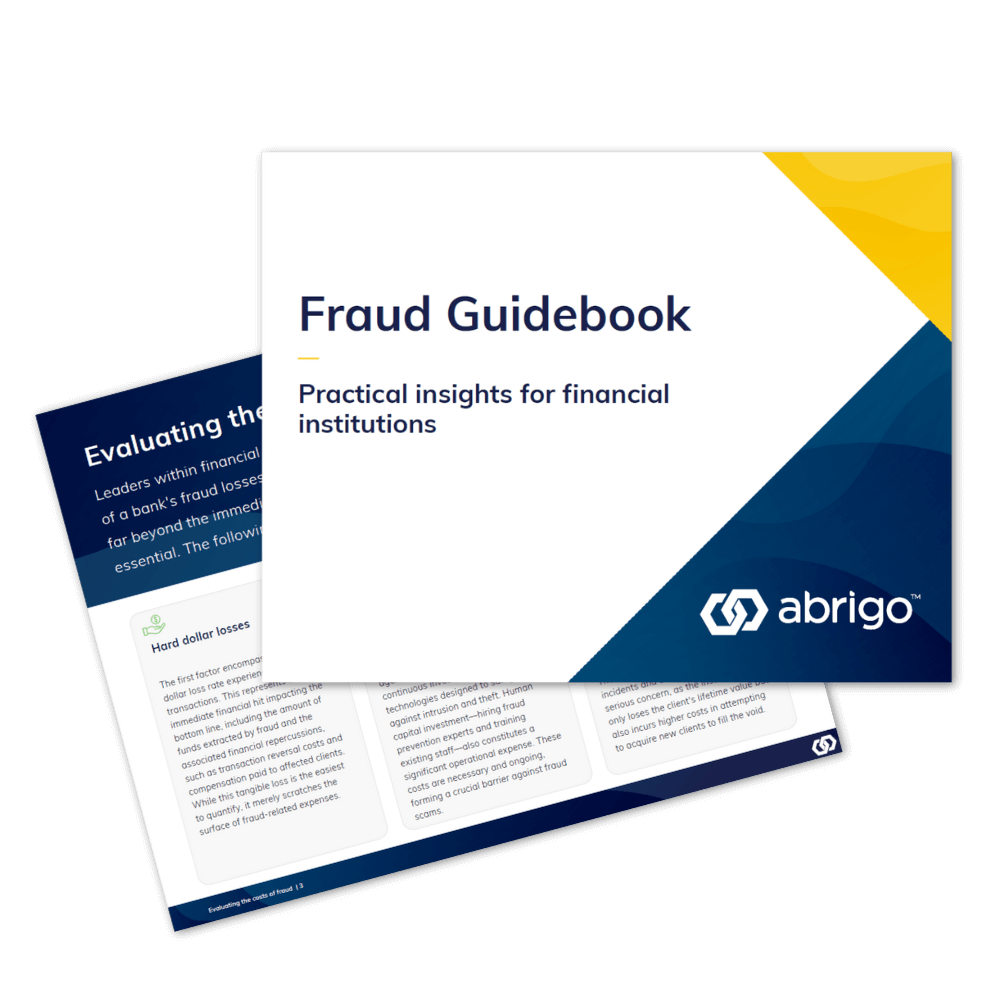
Download our fraud program guide

This introductory guidebook for fraud and AML compliance professionals provides an in-depth review of the most common fraud methods and scams that bank and credit union customers face, plus:

  • Check, wire, cryptocurrency, and AI-driven fraud typologies.
  • FinCEN guidance and checklists for educating customers on avoiding scams.

  • Best practices for budgeting and making a case for automated fraud detection technology.
  • Advantages to combining fraud and AML departments for a united front against financial crime.

In this guide:

Fraud programs need cutting-edge technology and consistent processes to excel in proactive, dynamic prevention and detection.

This fraud guidebook covers:

Get a copy of the Fraud Guidebook in your inbox.

Evaluating the costs of fraud

Leaders within financial institutions are frequently tasked with grasping the full scope of a bank's fraud losses and their impact. Recognizing that the repercussions extend far beyond the immediate monetary losses from each fraudulent transaction is essential.

An exploration of modern fraud typologies

Fraudsters are continuously adapting their methods, creating new and increasingly sophisticated typologies. As professionals in fraud prevention, staying ahead of these threats requires more than just awareness—it demands deep expertise and an understanding of the latest trends shaping criminal behavior. This section will explore the most pressing fraud typologies including check, wire, and P2P fraud, equipping you with the knowledge and strategies necessary to safeguard your organization and mitigate emerging risks.

Cryptocurrency and AI-driven fraud

Cryptocurrency is fast becoming a favorite for scammers, not just in the murky realms of the dark web but in everyday transactions. Fraud involving cryptocurrency represents more than half of the reported fraud losses in 2023 at $5.6 billion. Why is cryptocurrency fraud skyrocketing? It boils down to opportunity. In another concerning trend, AI-enabled fraud losses in the U.S. are projected to soar to $40 billion by 2027, a significant jump from $12.3 billion in 2023. This sharp increase signals an urgent need for financial institutions to strengthen their fraud detection measures and stay ahead of these sophisticated threats. While AI will undoubtedly increase fraud attempts, AI and ML are part of the solution to mitigating risk through better detection.

Combining AML/CFT and fraud programs

As financial crimes grow more complex, community financial institutions are rethinking how they approach risk management. A leading strategy gaining traction is FRAML—the integration of fraud detection and anti-money laundering (AML) programs. By merging these traditionally separate functions under one strategy, financial institutions are improving their ability to detect suspicious activity, respond to evolving threats, and align with regulatory expectations.

Budgeting for new fraud technology and mitigating risk

Many of the fraud typlogies discussed in this guidebook are best combatted with the help of new and improving fraud detection software. Introducing new banking products in the financial services industry is an exciting venture and what gives financial institutions a competitive advantage. However, with all innovation comes great responsibility, especially when it comes to safeguarding those new products against fraud. Financial crime professionals should insist on a seat at the table when new banking products are first introduced.

Learn why staff expertise combined with AI and machine learning is the future of fraud detection.

Download guidebook

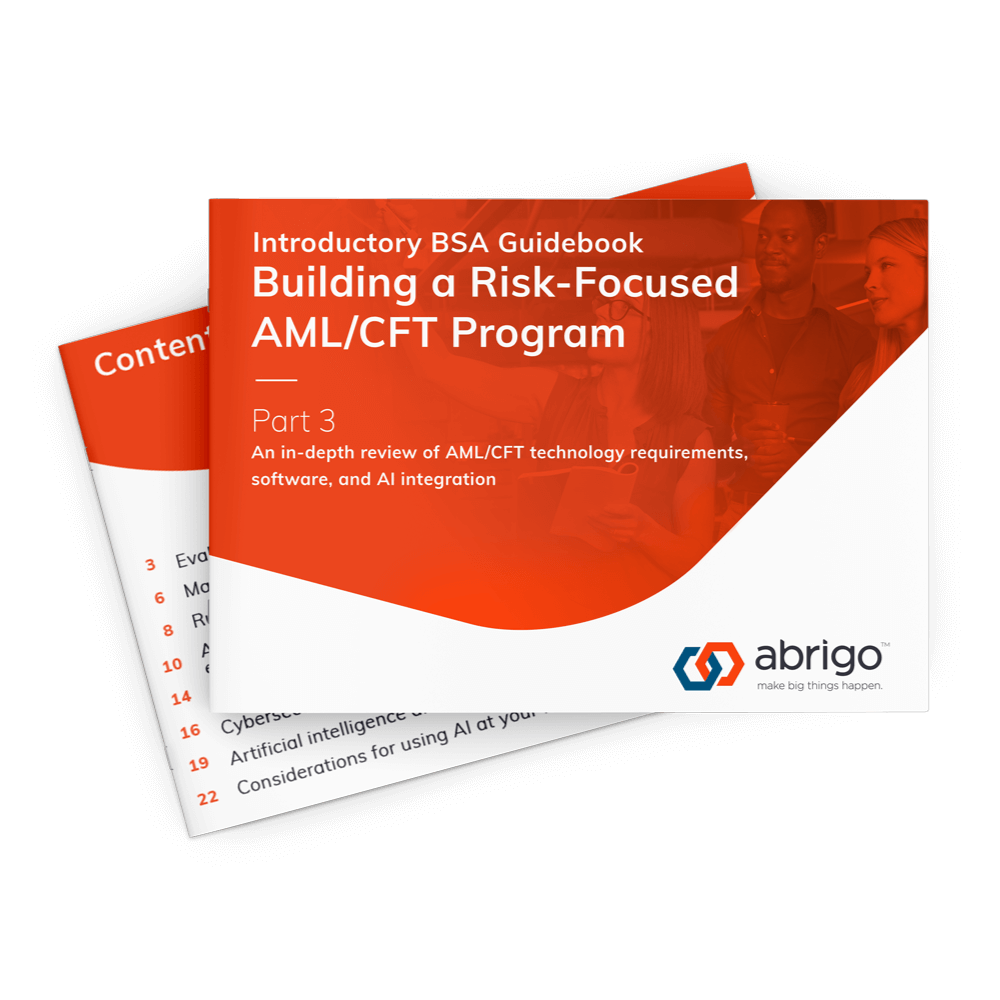
Download Part 3 of our AML/CFT program guide

This introductory guidebook for AML compliance provides best practices for integrating technology in your AML/CFT and fraud programs, including:

  • Change management strategies such as steps for evaluating your current workflow and budgeting for technology
  • The difference between rules- and behavior-based analytics and how to find a good balance when detecting suspicious activity

  • Creating a testing environment to determine the sweet spot for each scenario and risk rating setting within your AML software. 
  • Cloud computing and cybersecurity considerations

In this guide:

Optimizing technical resources like AI and machine learning can streamline AML/CFT processes by enhancing efficiency, improving accuracy, and allowing staff to focus on areas of most significant risk.


We outline best practices on many AML/CFT topics. Part 3 covers:

Get a copy of Part 3 of the Introductory BSA Guidebook in your inbox.

Evaluating and improving your AML/CFT system

Ensuring the technology behind your AML/CFT program is used to its fullest capabilities is vital for maintaining a sound compliance program. Taking the first step toward automating your AML/CFT program can be daunting. Use this chapter as a checklist to gauge your program's preparedness to embrace new techology.

Creating an efficient testing environment

One of the best ways to address dynamic and emerging risks is to conduct above-the-line/below-the-line testing to ensure your software operates at its peak efficiency. Above-the-line/below-the-line testing is a statistical exercise that rigorously analyzes transaction monitoring parameters to identify the optimal settings for suspicious activity monitoring for your institution’s unique risk profile.

Cloud computing and securing data

Cloud computing environments allow cloud service providers to segregate and serve multiple clients on a standard set of physical or virtual hardware. Three of the more common cloud service models have different levels of shared responsibilities between provider and client and are listed in this chapter.

Cybersecurity considerations for AML professionals

Banks and credit unions handle sensitive financial data and transactions that affect millions of customers and businesses. They also face constant cyberattacks from hackers who seek to disrupt services or steal money or data. With the right training, banks and credit unions can reduce their own cyber risks and improve customer and member trust. 

Artificial intelligence and how to leverage it against financial crime

Artificial intelligence (AI) has become a global game-changer, offering innovative solutions and efficiencies that were once unimaginable. While AI provides tremendous benefits to financial institutions—streamlining operations, enhancing customer experiences, and bolstering security—it also presents new opportunities for criminals. This chapter explores some of the more common AI methods fraudsters use to prey on their victims and how AI can help combat fraud.

Create a risk-focused AML/CFT program

Download Part 3

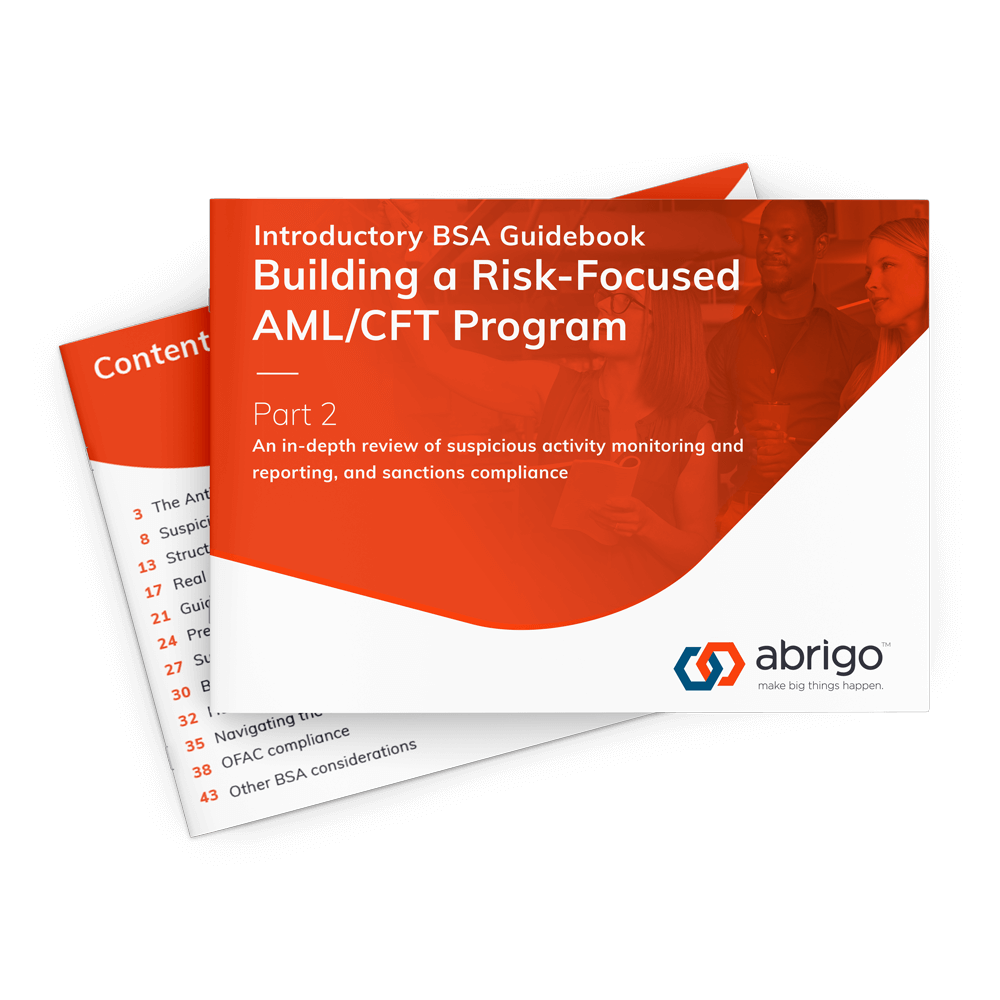
Download Part 2 of our AML/CFT program guide

This introductory guidebook for AML compliance provides an in-depth review of the AML Act of 2020, OFAC compliance, and suspicious activity monitoring for fraud and other financial crimes. Learn about:

  • Human trafficking red flags and U.S. border considerations
  • Suspicious activity monitoring and reporting

  • Beneficial ownership rules
  • OFAC compliance and sanctions compliance

Get a copy of Part 2 of the Introductory BSA Guidebook in your inbox.

AMLA considerations and suspicious activity

The Anti-Money Laundering Act of 2020 (AMLA) was the first amendment to the Bank Secrecy Act in nearly two decades. As regulations and guidance continue to unfold, learn what AMLA requires and how to monitor and report suspicious activity. 

Real estate money laundering and elder financial exploitation

Learn about some of the oldest and most common forms of money laundering and fraud: real estate money laundering and elder financial exploitation. Read FinCEN guidance on these topics and set up your AML/CFT and fraud programs for success. 

Human trafficking red flags, navigating the U.S.-Mexico border, and guidance regarding the fentanyl epidemic

These chapters educate staff on how current events at the U.S. border may impact their AML/CFT responsibilities. Learn regulator expectations for financial institutions in areas affected by these complex issues and how to prevent financial crimes associated with them. 

Beneficial ownership rules and OFAC compliance

Financial institutions act as the front-line defense and exercise preventative measures on behalf of the U.S. government. Additionally, many companies are required to begin reporting to the U.S. government information about beneficial ownership or who ultimately owns or controls them. Learn how these policy rules must be accounted for in an effective AML/CFT program.

Create a risk-focused AML/CFT program

Download Part 2

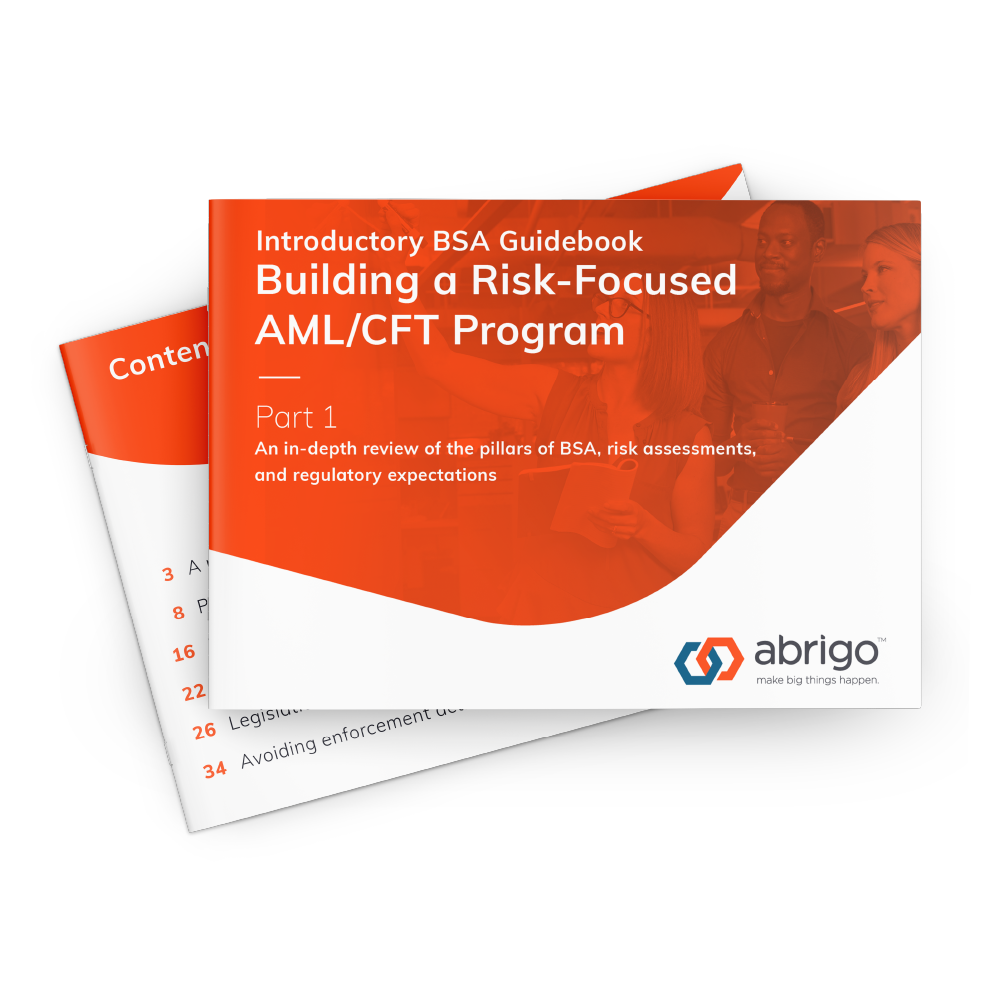
Download Part 1 of our AML/CFT program guide

This introductory guidebook for AML compliance provides an in-depth review of the pillars of the Bank Secrecy Act (BSA) and everything you need to build a risk-focused AML/CFT program, including:

  • Regulatory expectations and FATF and FFIEC standards 
  • Upcoming FinCEN AML/CFT program rules and predicted legislation

  • Compliance case studies and an overview of whistleblower laws
  • Common examiner findings that your financial institution can use to prepare

Get a copy of Part 1 of the Introductory BSA Guidebook in your inbox.

A risk-focused AML/CFT program

Regulators adapt their scrutiny accordingly to a financial institution's unique risk profile, so comprehensive, board-approved risk assessments are crucial for identifying and mitigating risks, aligning resources, and ensuring program effectiveness. Is your AML department taking a risk-based approach?

Pillar-based exam preparation for your bank or credit union

Strong internal controls ensure operational continuity and regulatory adaptability. For example, compliance officers need authority, independence, and resources to oversee AML/CFT efforts. Staff training must be role-specific, current, and documented. Due diligence processes should identify and monitor higher-risk customers, beneficial owners, and suspicious activity.

Maintaining and enhancing your AML/CFT program

Continuing education for AML/CFT officers is vital, with certifications and industry events offering knowledge and networking opportunities. This chapter lists budget-friendly ways to offer continuing education and emphasizes that department sustainability depends on proactive planning, succession strategies, program calibration, and cooperation with other departments.

FATF and FFIEC standards

The Financial Action Task Force (FATF) focuses on combating terrorist financing, addressing deficiencies in high-risk jurisdictions, and regulating virtual assets. The Federal Financial Institution Examination Council (FFEIC) guidelines require institutions to allocate suitable resources, grant AML/CFT officers authority, and ensure compliance programs are risk-based and adaptable. 

Legislation and regulation on the horizon

FinCEN’s long-anticipated AML/CFT program rule and new legislative action on cannabis banking will both be a gamechanger for financial institutions. Read the guide to learn about the ramifications of these expected decisions and what financial institutions should be doing to prepare.

Avoiding enforcement actions

Enforcement cases reveal how understaffing, poor documentation, and unresolved deficiencies lead to significant penalties. Institutions must prioritize hiring qualified staff, addressing regulatory feedback, and documenting compliance efforts. Download the guide for example cases and tips on avoiding fines and reputational harm.

Create a risk-focused AML/CFT program

Download Part 1

Leaders at financial institutions are constantly tasked with making key decisions that impact an institution’s financial performance, outlook, and strategy. Meanwhile, they must navigate the added pressures of changing economic landscapes, interest rates, customer demand, etc. that come into play. This is where a sound and robust asset/liability management (ALM) model is crucial to help navigate the uncertainty and make better strategic decisions. This ALM eBook explains how asset/liability management can help financial institutions get the most profitability out of their balance sheets while managing their risk profiles.

Download the ALM eBook to explore topics like: