

An effective AI strategy connects AI investments to measurable business priorities. For community banks and credit unions, that means identifying workflows where AI can improve effectiveness, evaluating opportunities based on potential return, implementation effort, risk, and time to value, and piloting the strongest candidates before expanding their use.
How can AI improve efficiency and effectiveness in banking
If generative AI technology alone is projected to unlock between $200 billion and $340 billion in value annually for the banking sector, then why are nearly half of financial institutions still on the fence about adopting AI-integrated tools?
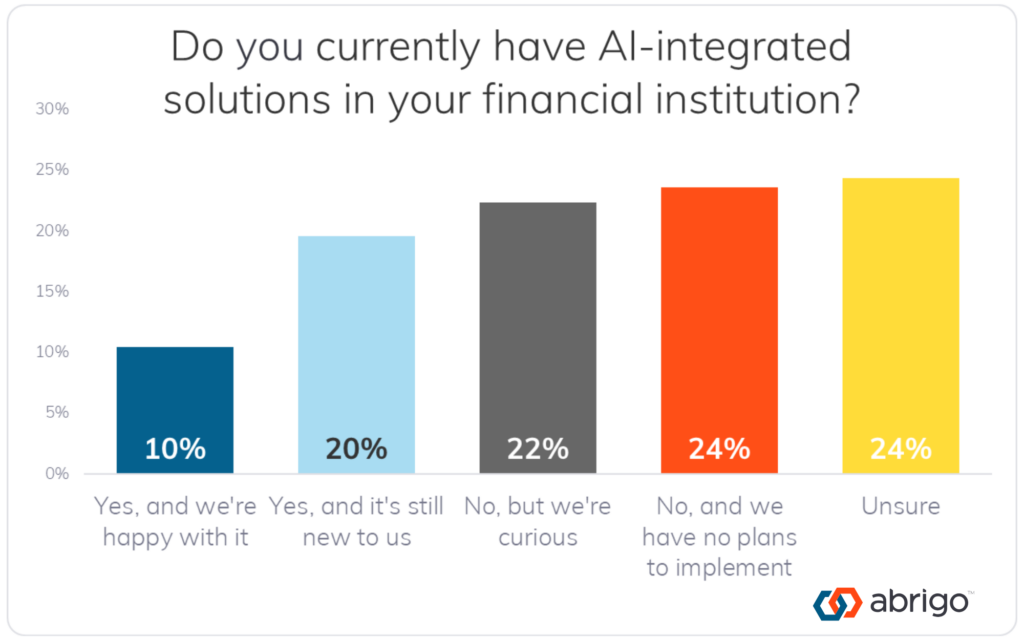 That’s what a recent Abrigo poll of webinar attendees found. Another 24% reported no plans to implement AI-integrated solutions, and only 30% said they’re using such tools.
One reason financial institutions are reluctant to “buy in” to AI-integrated tools is that many see its central value as making the workforce more efficient - doing more work in the same amount of time. If AI merely makes people more efficient, its true potential is missed. Efficiency alone doesn’t set a financial institution apart. Instead, an AI strategy that focuses on making staff more effective can create competitive advantages to allow some banks and credit unions to punch above their weight.